Behaviour in Crisis Lab - Behaviour in Crisis Lab
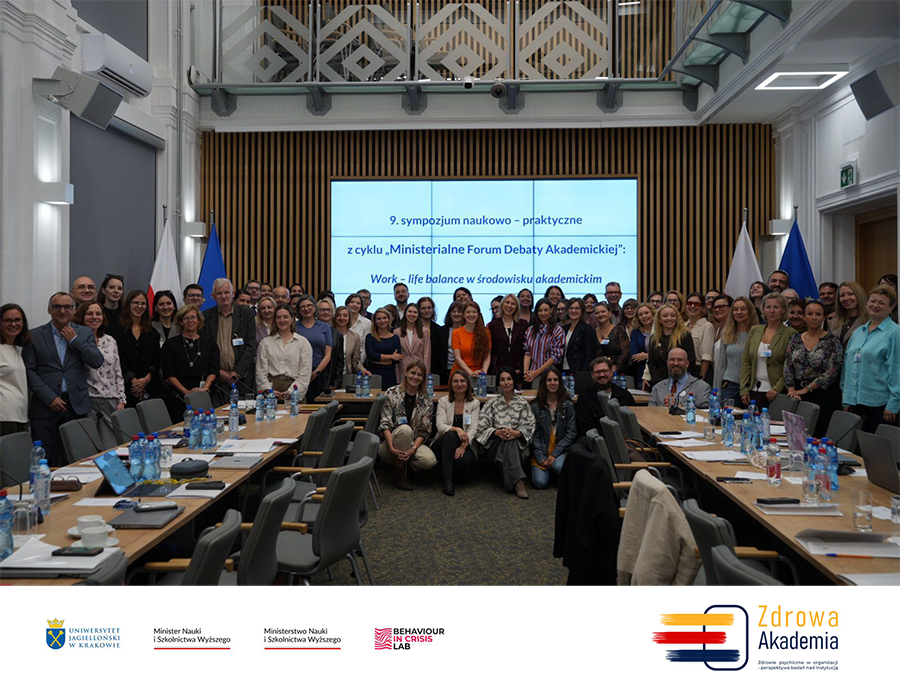
Healthy Academia Team at the Ministry of Science and Higher Education Symposium
On 7 September 2026, the 9th symposium in the Ministerial Forum for Academic Debate series was held, bringing together researchers and practitioners to discuss work–life balance in academia. The event was attended by the Healthy Academia research team, which presented a talk on the balance between the demands of academic work, the values of the academic community, and the risk of burnout.

Solidarność małych wspólnych celów. Co zrobić, by Ukraińcy i Polacy widzieli w sobie partnerów
„Relacje między Polakami i Ukraińcami nie będą zależały od jednego wydarzenia ani jednej kampanii społecznej. Tylko od tego, czy uda nam się budować codzienne doświadczenia współpracy i jednocześnie uczciwie rozmawiać o trudnych sprawach, nie zamieniając ich w konflikt między »nami« i »nimi«" – mówi prof. Małgorzata Kossowska, liderka Behaviour in Crisis Lab, kierowniczka Zakładu Psychologii Społecznej oraz Centrum Badań nad Poznaniem Społecznym w Instytucie Psychologii UJ, w rozmowie z Katarzyną Sroczyńską dla OKO.press.

Ład i porządek, czyli dlaczego tak trudno jest nam zmienić zdanie
„Czy konserwatyści czują się mniej niepewni? Dlaczego ludzie chcą wierzyć, że świat jest sprawiedliwy? W czym tkwi siła dogmatyzmu?" – to pytania, wokół których toczy się rozmowa Katarzyny Sroczyńskiej z prof. Małgorzatą Kossowską, liderką Behaviour in Crisis Lab, kierowniczką Zakładu Psychologii Społecznej oraz Centrum Badań nad Poznaniem Społecznym w Instytucie Psychologii UJ, opublikowana na łamach OKO.press.
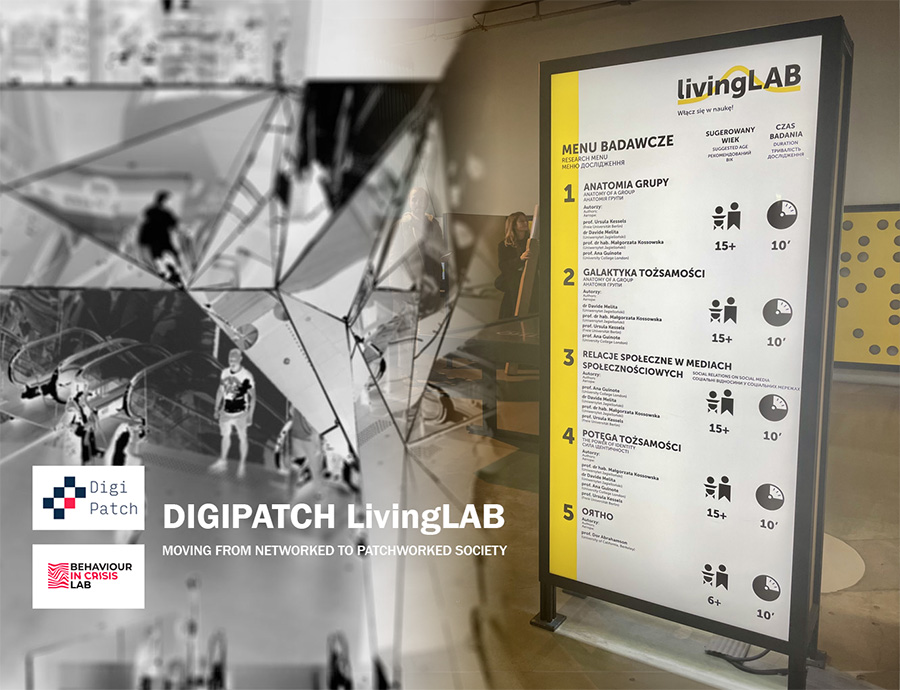
Wystawa DigiPatch LivingLab w Centrum Nauki Kopernik
Ponad 87 tysięcy osób wzięło udział w wystawie DigiPatch LivingLab, działającej od listopada 2024 do kwietnia 2026 roku w Centrum Nauki Kopernik w Warszawie. Dzięki czterem stanowiskom badawczym zwiedzający mogli uczestniczyć w projekcie DigiPatch, który analizuje psychologiczne, społeczne i kulturowe mechanizmy kształtowania się (mikro)tożsamości w środowisku cyfrowym. Niemal 18,6 tysiąca osób ukończyło pełną procedurę badawczą, a zgromadzone dane zasilą kolejne międzynarodowe analizy i publikacje naukowe.
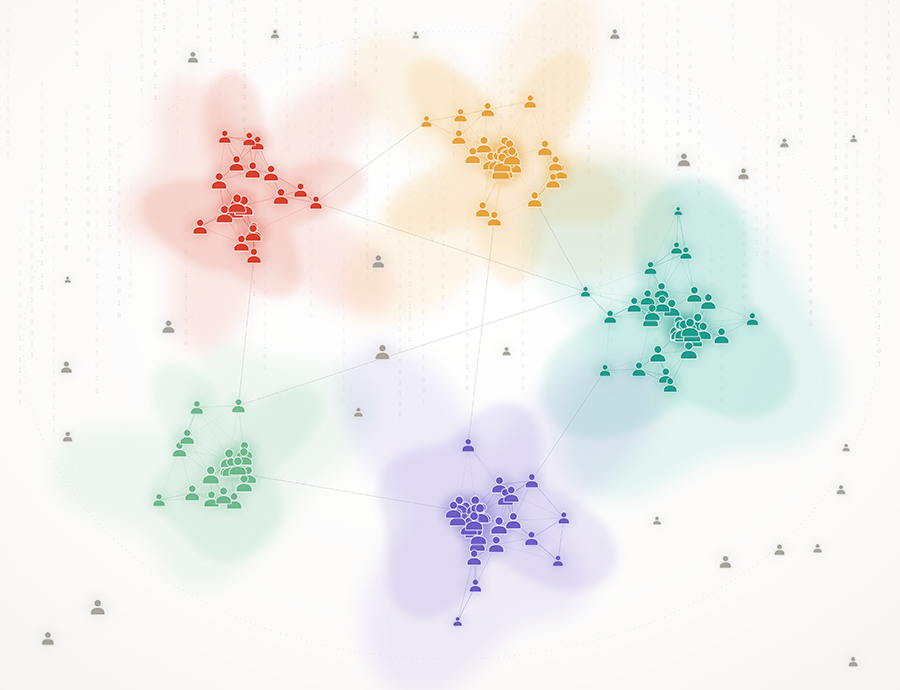
More Information Does Not Mean More Truth: Jagiellonian University Researchers Explain Why It Is So Hard to Change Our Minds in the Age of Algorithms
Why do two people who read the same article draw entirely different conclusions from it? A team from the Jagiellonian University's Behaviour in Crisis Lab – Dr Anna Knorr and Prof. Małgorzata Kossowska – show in their published analysis, “Democracy in the Age of Algorithms,” that the answer lies not only in how social media function, but above all in how the human brain works. The authors combine insights from cognitive neuroscience with research on the architecture of digital platforms to explain why facts so rarely change our minds – and what this means for the future of democracy.

Between Polarization and Fragmentation: A New Perspective on Europeans’ Political Identities
Is Europe really divided into two opposing political camps? A study conducted within the DigiPatch project and published in Media Psychology suggests that reality is far more complex than the dominant narrative of polarization implies. An analysis of data from five European countries shows that contemporary political identities form a multidimensional mosaic that cannot be reduced to a simple left-right divide.

Jagiellonian University Research Team Launches the “Healthy Academia” Project
A research team from Jagiellonian University has launched the “Healthy Academia” project, aimed at providing an in-depth assessment of mental health and its determinants within the academic community in Poland. The initiative is made possible through support from the Ministry of Science, which has recognised the need for comprehensive research into the functioning of higher education in all its dimensions.
Newsletter #7
Several more months of intensive research activity, international collaboration, and knowledge dissemination are behind us. In the seventh issue of the Behaviour in Crisis Lab newsletter, we look back on the most important events of the first half of 2026 – from conferences and lectures, through publications and media engagement, to research initiatives and events bringing together the international community of scholars studying human behaviour in times of polycrisis.
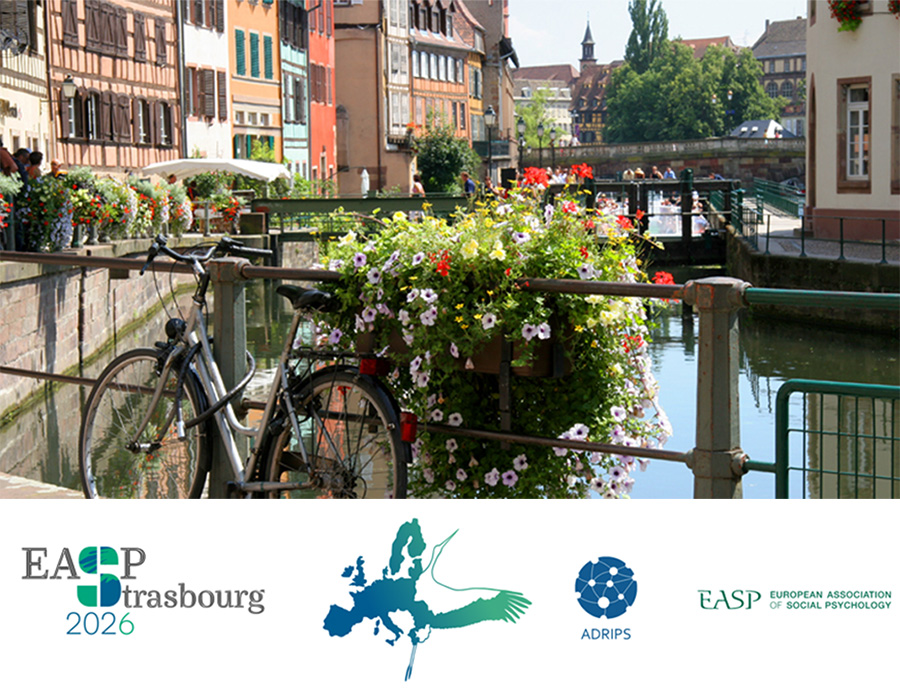
Behaviour in Crisis Lab at EASP 2026 in Strasbourg
Researchers from Behaviour in Crisis Lab took part in the General Meeting of the European Association of Social Psychology (EASP), one of Europe’s leading conferences in social psychology, held in Strasbourg, France, from 30 June to 4 July 2026. The event brought together researchers from across the world to discuss the latest theoretical, methodological, and applied advances in social psychology and to foster international scientific collaboration.
Getting to Know the Sociology of Mental Health: Professor Hubert Kaszyński’s Lecture in UMCS’s New Discussion Series
The Department of Social Problems of Health at the Institute of Sociology, Maria Curie-Skłodowska University (UMCS), has launched a new discussion series entitled Getting to Know Sociology. Close Encounters Between People, aimed at addressing important social issues through presentations delivered by distinguished scholars and experts representing various disciplines. The guest of the inaugural meeting, held on 24 June in Lublin, was Professor Hubert Kaszyński, leader of a research group at Behaviour in Crisis Lab and coordinator of the research project Mental Health in Organizations: An Institutional Research Perspective – “Healthy Academy”.
Aware but inactive: the psychology of crisis engagement
Most people are aware of the major crises facing the world today: climate change, war and conflicts, political instability, social inequality, and many others. Yet awareness alone rarely translates into action. People who recognise the urgency of a threat often do little to address it, and those who do act may struggle to sustain their engagement over time. Understanding why requires looking beyond information and attitudes, and into the psychology of motivation.
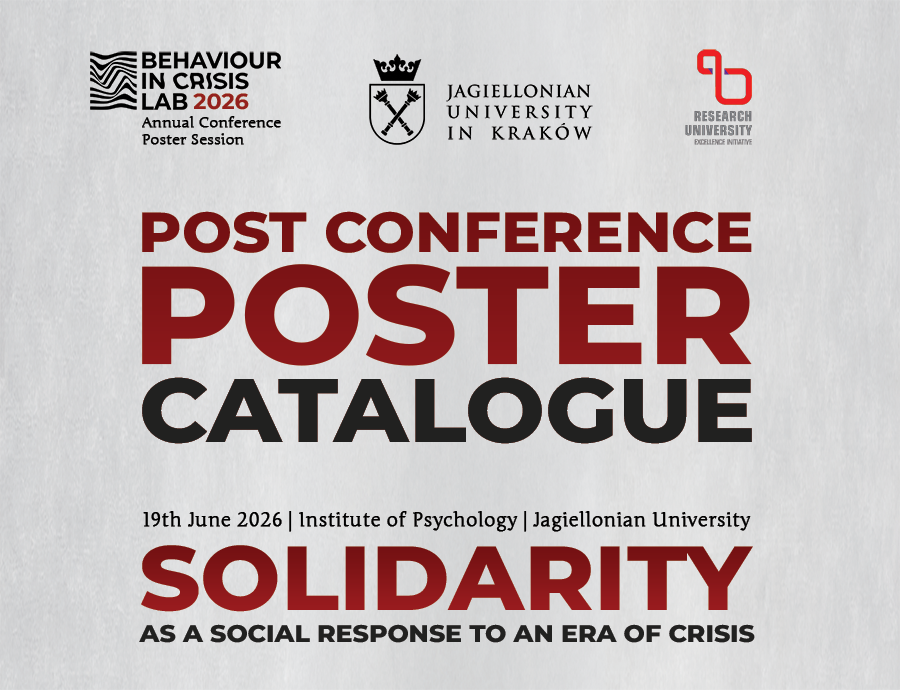
Behaviour in Crisis Lab Annual Conference 2026: Post-Conference Poster Catalogue
We are pleased to share the post-conference catalogue of posters presented at the Behaviour in Crisis Lab Annual Conference 2026: "Solidarity as a Social Response to an Era of Crisis". This publication brings together all works presented during this year's poster session and offers an opportunity to revisit some of the most engaging research topics discussed at the conference.
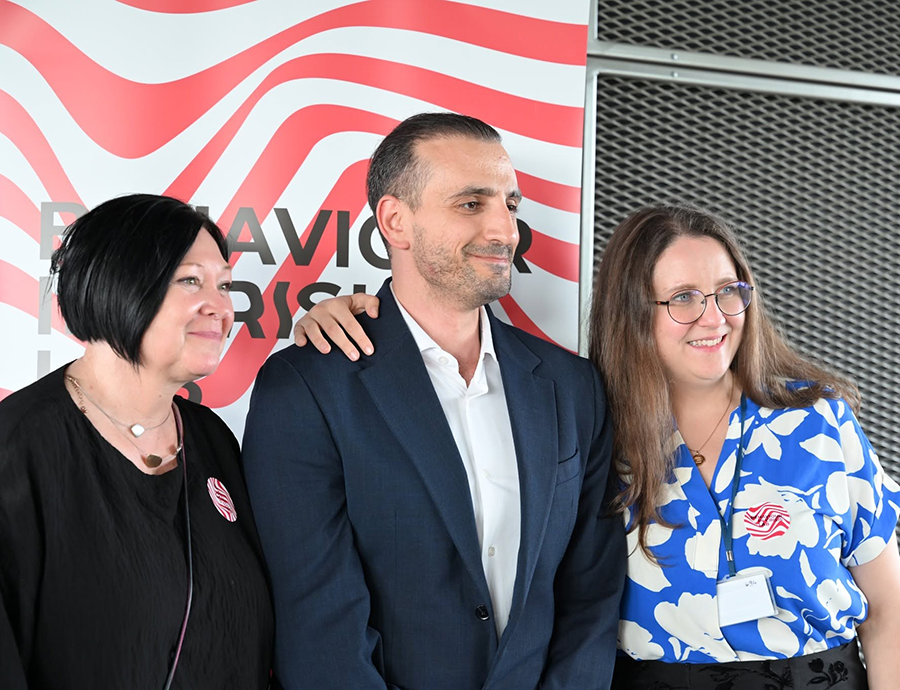
Behaviour in Crisis Lab Annual Conference 2026: “Solidarity as a Social Response to an Era of Crisis” Behind Us
On June 19, the annual Behaviour in Crisis Lab conference took place. This year’s event, titled “Solidarity as a Social Response to an Era of Crisis,” brought together presentations, keynote talks, discussions, and a poster session, creating an excellent opportunity to expand knowledge, exchange ideas, connect with members of the academic community, and reflect on current research directions.
We would like to thank all our guests, speakers, and the entire Behaviour in Crisis Lab research team for a wonderful year!
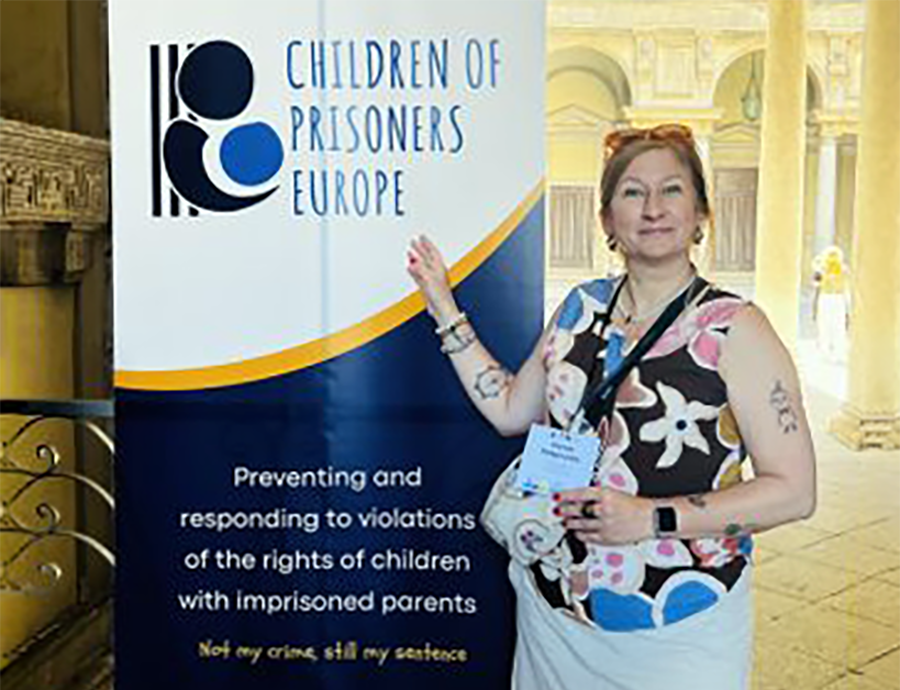
International Conference "Building Holistic Ecosystems for Children with a Parent in Prison – Across NGOs, Prisons, Schools, Media, and Society"
From 10 to 13 June, one of the leaders of the Behaviour in Crisis Lab, Małgorzata Michel, PhD, DSc, Associate Professor at the Jagiellonian University, took part in the 18th International Conference of COPE (Children of Prisoners Europe). The event was co-organised by Bambini Senza Sbarre (ETS), the first organisation in Europe to develop a document regulating the rights of children of imprisoned parents.
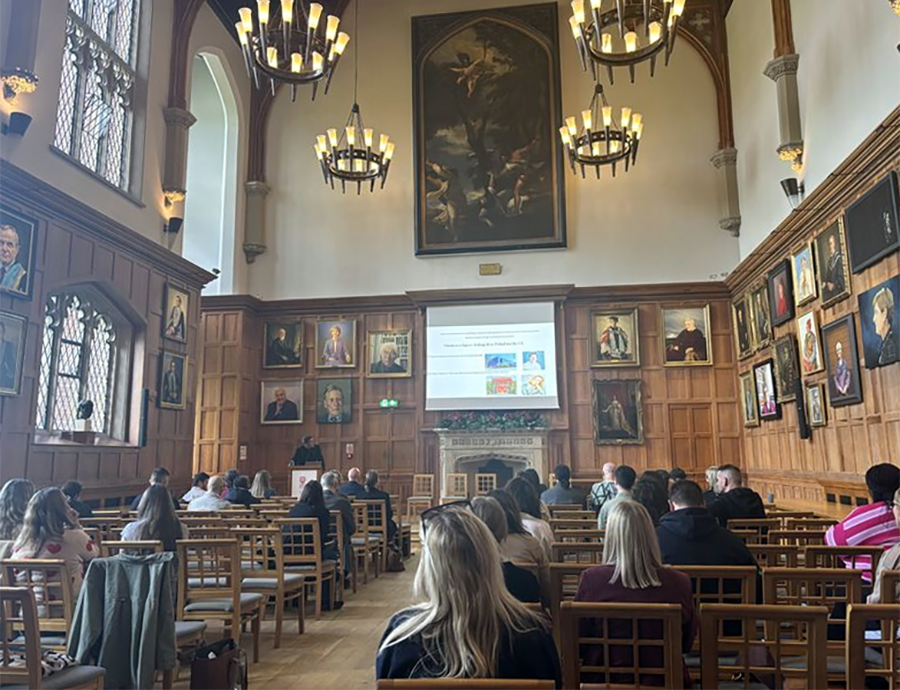
The situation of Ukrainian refugees. Behaviour in Crisis Lab research presented at an international conference in Belfast
On 8 June 2026, the international conference “Trauma, Mental Health and Law in Refugee and Asylum Seeking Populations” was held at Queen’s University Belfast, focusing on issues related to mental health and the legal situation of refugees. As part of the conference, Dr Marek Palace (Liverpool John Moores University), a researcher and member of the Behaviour in Crisis Lab team, presented an analysis of unique data from Poland, Ukraine, and the United Kingdom on the wartime experiences of Ukrainian refugees, risk factors, and mechanisms of psychological resilience.

NCN OPUS 30 grant awarded to Prof. Katarzyna Jaśko from the Behaviour in Crisis Lab
The project led by Prof. Katarzyna Jaśko from the Behaviour in Crisis Lab has received funding from the Polish National Science Centre (NCN) under the OPUS 30 call. The grant, worth over PLN 2.3 million, will investigate how citizens, activist groups, and political parties with different ideological orientations pursue their goals—from persuasive strategies to mechanisms of coordinated collective action, including organizing, communication, and influence.
Newsletter #7 - coming soon!
The latest achievements and activities of the research team, conferences, a list of ongoing projects, media appearances, recent publications, awards and distinctions, as well as previews of upcoming events from our calendar - all this will be included in the upcoming Newsletter #7 of Behaviour in Crisis Lab.
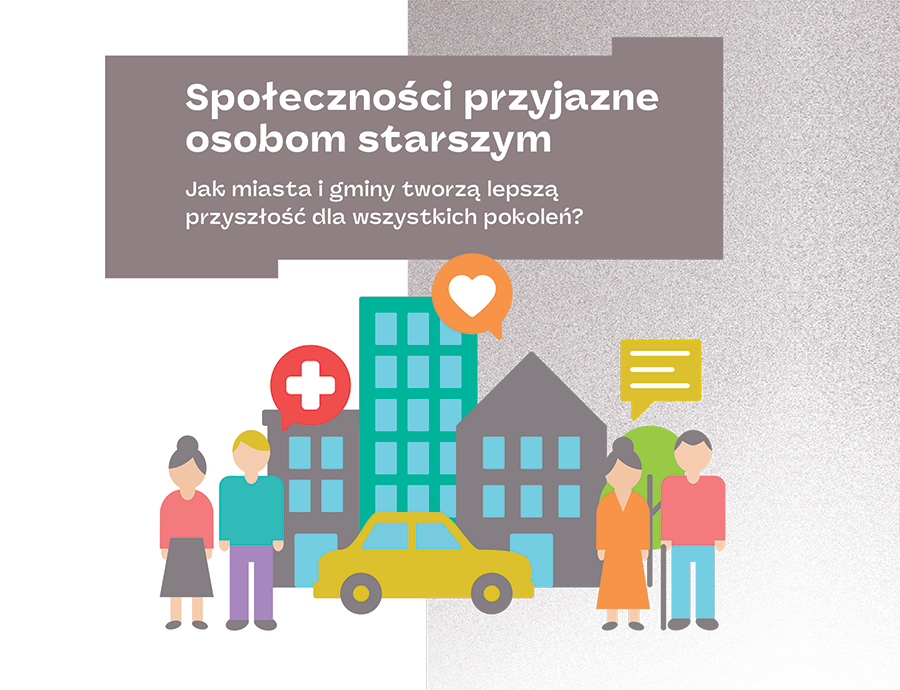
AFCC Poland: A Practical Guide to Age-Friendly Communities
A new open-access guide, “Age-Friendly Communities: How Cities and Municipalities Are Building a Better Future for All Generations”, supported by the Behaviour in Crisis Lab, highlights how cities and municipalities can create better futures for all generations. Developed within the AFCC Poland initiative, coordinated by the Jagiellonian University (Centre for Evaluation and Analysis of Public Policies) in collaboration with the Medical College, the network brings together local governments, experts, and public institutions committed to improving quality of life across the lifespan.
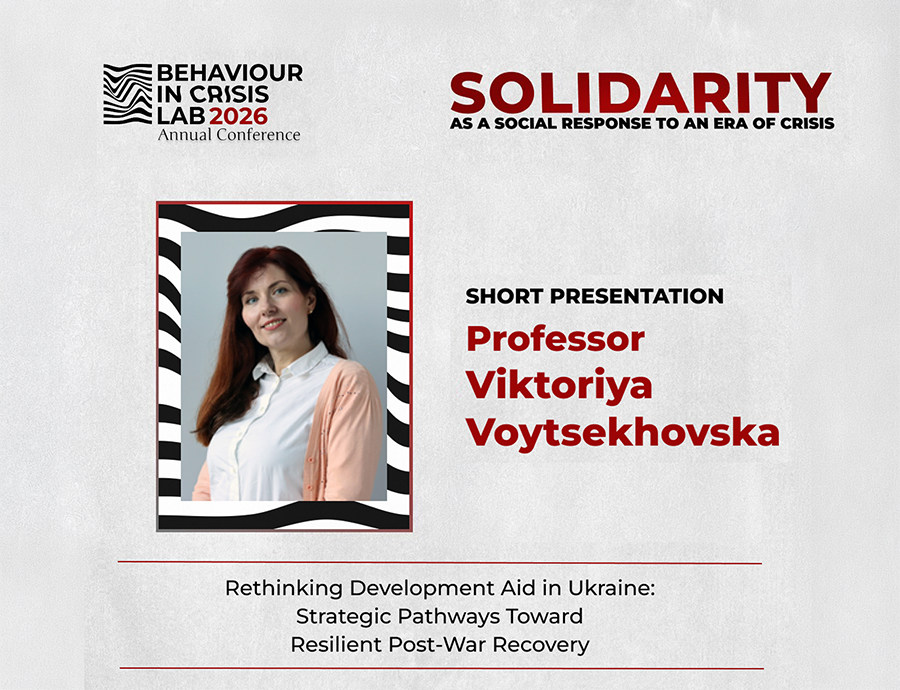
Behaviour in Crisis Lab 2026 Annual Conference. Presentation: Viktoriya Voytsekhovska, Lviv Polytechnic National University / Jagiellonian University
We are pleased to introduce another speaker at the Behaviour in Crisis Lab 2026 Annual Conference – Solidarity as a Social Response to an Era of Crisis. The presentation entitled “Rethinking Development Aid in Ukraine: Strategic Pathways Toward Resilient Post-War Recovery” will be delivered by Viktoriya Voytsekhovska, a visiting professor at the Jagiellonian University and a researcher affiliated with Lviv Polytechnic National University, specializing in sustainable development, socio-economic transformation, and public policy analysis.
“Healthy Academia” project supported by a nationwide Advisory Board
We are pleased to announce that the “Healthy Academia” project, carried out within the Behaviour in Crisis Lab in collaboration with institutional partners, has received support from a nationwide Advisory Board bringing together experts from key academic centres across Poland.
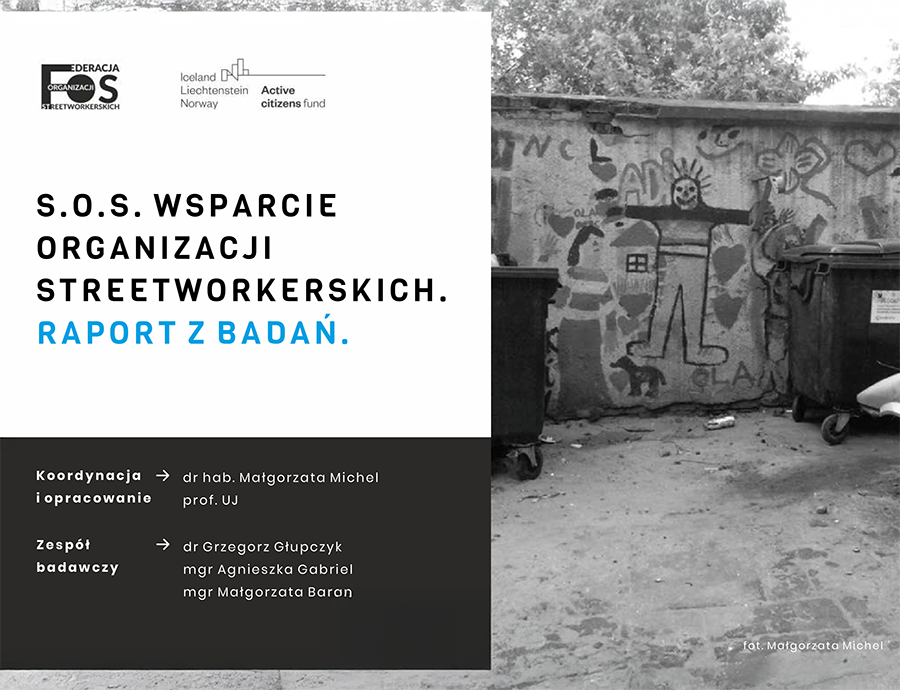
Określenie ram prawnych pracy z dziećmi realizowanej w ramach streetworkingu. Rekomendacja na podstawie badań prof. Małgorzaty Michel z Behaviour in Crisis Lab
Rzecznik Praw Dziecka, Monika Horna-Cieślak, w wystąpieniu generalnym z 26 kwietnia 2026 roku, skierowanym do Ministry Rodziny, Pracy i Polityki Społecznej Agnieszki Dziemianowicz-Bąk, dotyczącym uregulowania kwalifikacji, doświadczenia i zasad zatrudniania wychowawców w placówkach wsparcia dziennego, powołuje się na raport badawczy „S.O.S. wsparcie organizacji streetworkerskich” autorstwa dr hab. Małgorzaty Michel, prof. UJ.

"Czy ten świat się kończy? Rozmowy o niepewności, polaryzacji i solidarności" Małgorzaty Kossowskiej i Katarzyny Sroczyńskiej
Behaviour in Crisis Lab oraz Wydawnictwo Smak Słowa zapraszają do Instytutu Psychologii UJ na spotkanie z prof. Małgorzatą Kossowską i Katarzyną Sroczyńską, autorkami książki „Czy ten świat się kończy? Rozmowy o niepewności, polaryzacji i solidarności”.
Książka, której premiera odbyła się 7 kwietnia 2026 r., to zbiór rozmów z prof. Małgorzatą Kossowską o tym, jak w świecie nakładających się kryzysów rozumieć siebie, innych ludzi oraz mechanizmy kształtujące nasze emocje, myślenie i zachowanie.
Podczas wydarzenia porozmawiamy m.in. o uprzedzeniach po obu stronach sceny politycznej, wpływie mediów społecznościowych na polaryzację, sposobach odbudowy wspólnoty oraz znaczeniu poglądów politycznych psychologów społecznych.
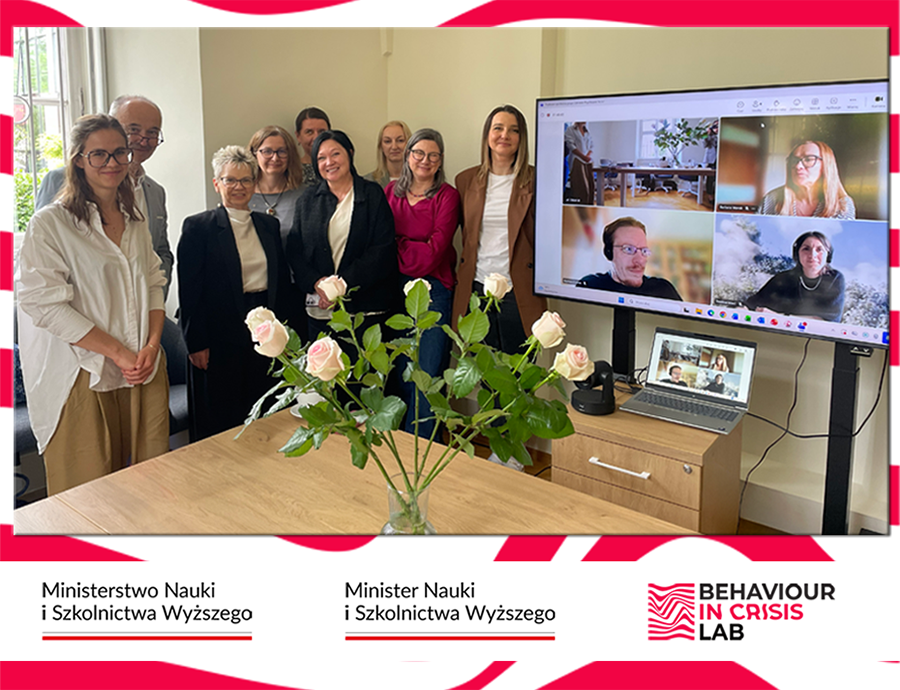
Healthy Academia – a new research project to examine mental health in the academic environment
We are pleased to announce the launch of a new research initiative, “Healthy Academy.” The aim of the project is to conduct an in‑depth diagnosis of mental health and its determinants within the academic environment, as well as to develop recommendations for higher education institutions in Poland. The project is implemented with the support of the Behaviour in Crisis Lab research team, in cooperation with the Ministry of Science and Higher Education, the Student Centre for Support and Adaptation of Jagiellonian University, and the Strategy of the Center for Higher Education Research at Jagiellonian University.
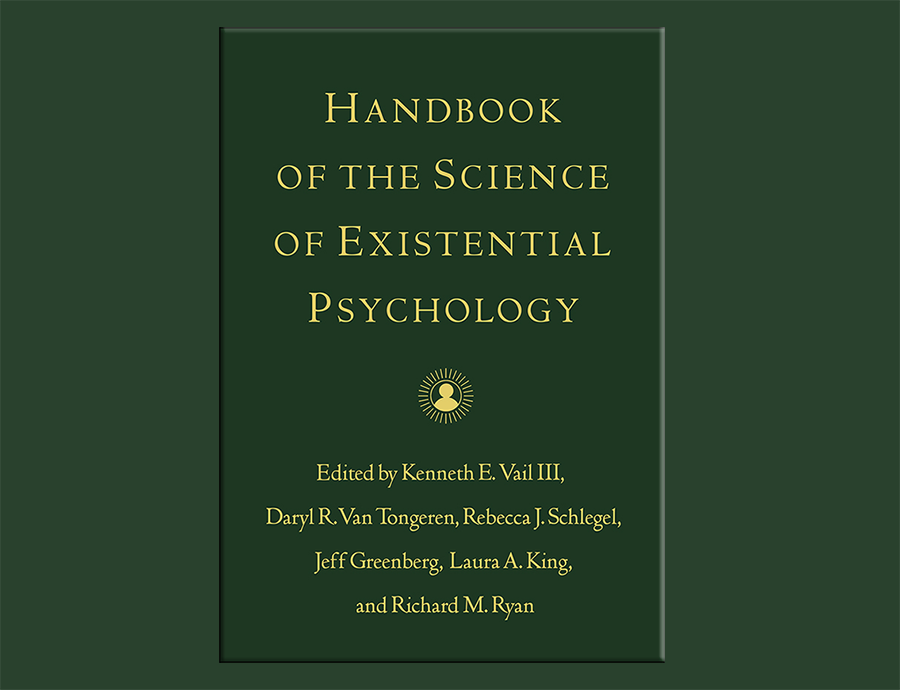
Uncertainty, cognition, and epistemic authority. How do we seek knowledge?
What mechanisms shape cognitive processes? What determines decision‑making and the functioning of individuals and groups under conditions of uncertainty? Prof. Małgorzata Kossowska, Dr Ewa Szumowska, Karolina Bonarska, and Jakub Cacek from Behaviour in Crisis Lab address these issues in the chapter Navigating Uncertainty: Cognitive Closure, Information Processing, Epistemic Authority in the Pursuit of Knowledge, published in the Guilford Press book Handbook of the Science of Existential Psychology. The authors examine research on motivations related to knowledge acquisition and the need for cognitive closure, and analyze the mechanisms of epistemic uncertainty reduction in the context of their social determinants.
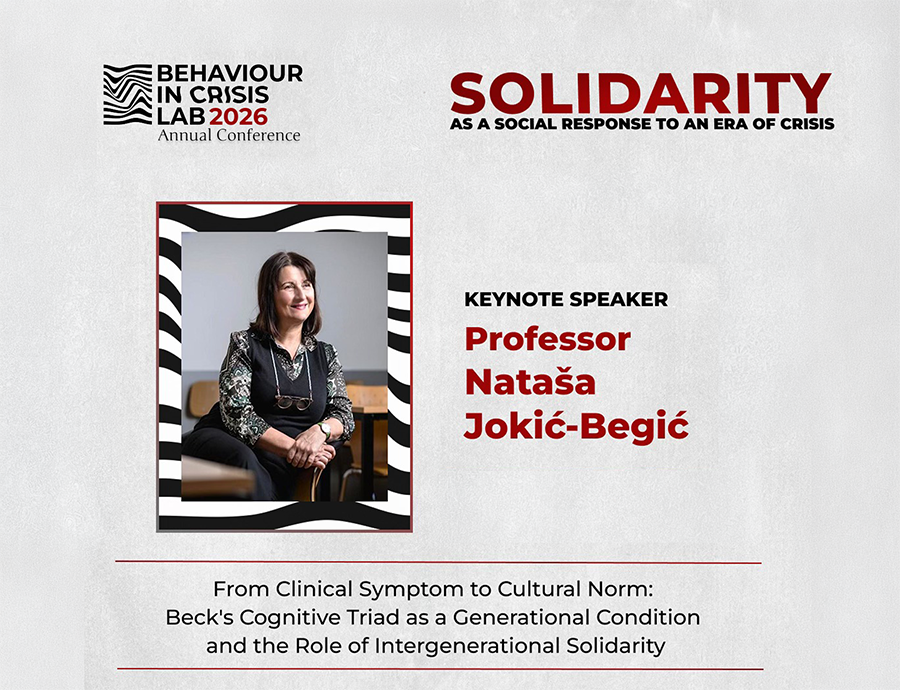
Behaviour in Crisis Lab 2026 Annual Conference. Keynote speaker: Professor Nataša Jokić‑Begić, University of Zagreb, Croatia
Among the keynote speakers of the Behaviour in Crisis Lab 2026 Annual Conference – Solidarity as a Social Response to an Era of Crisis will also be Professor Nataša Jokić‑Begić from the University of Zagreb, a distinguished scholar in clinical psychology and mental health, whose work focuses on how individuals function under conditions of uncertainty and crisis.

Greatness of a Nation or a Source of Stress?
On the Emotional Costs of National Narcissism
Can the belief in a nation’s unrecognized greatness serve as a shield against negative emotions? Findings presented in a recent article co authored by Prof. Małgorzata Kossowska and Anna Knorr, MA, from the Behaviour in Crisis Lab, indicate the opposite. National narcissism does not stem from poor emotional well being; instead, it becomes a source of psychological strain and stress. These results challenge common assumptions about the “emotional spiral” underlying this phenomenon and suggest that its roots lie deeper than in everyday mood fluctuations.
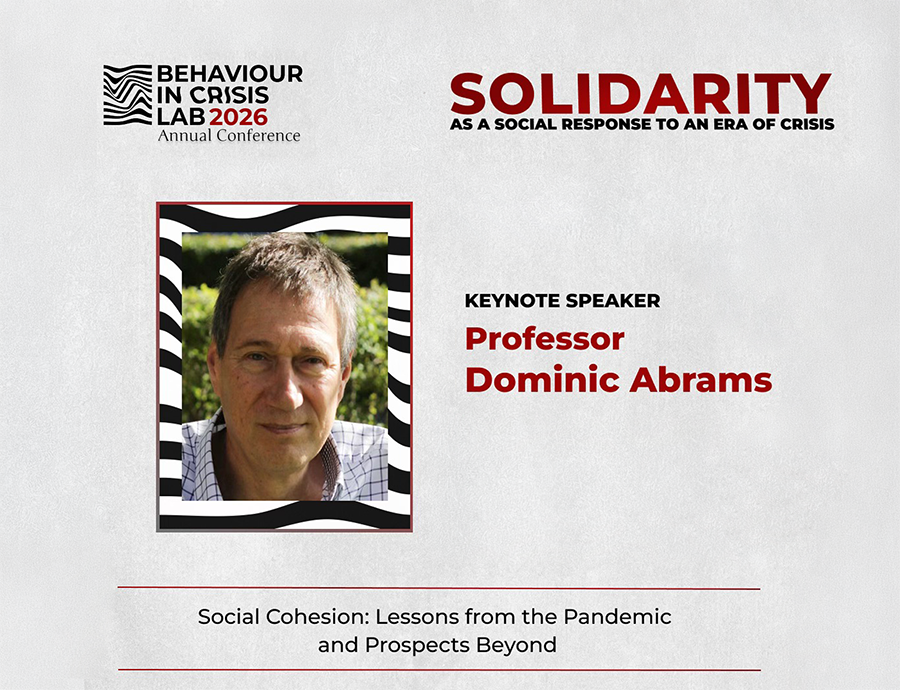
Behaviour in Crisis Lab 2026 Annual Conference. Keynote speaker: Professor Dominic Abrams, University of Kent, UK
Meet another keynote speaker of the Behaviour in Crisis Lab 2026 Annual Conference – Solidarity as a Social Response to an Era of Crisis. Our guest will be Professor Dominic Abrams from the University of Kent, a distinguished social psychologist specialising in social cohesion, social identity, and intergroup relations.
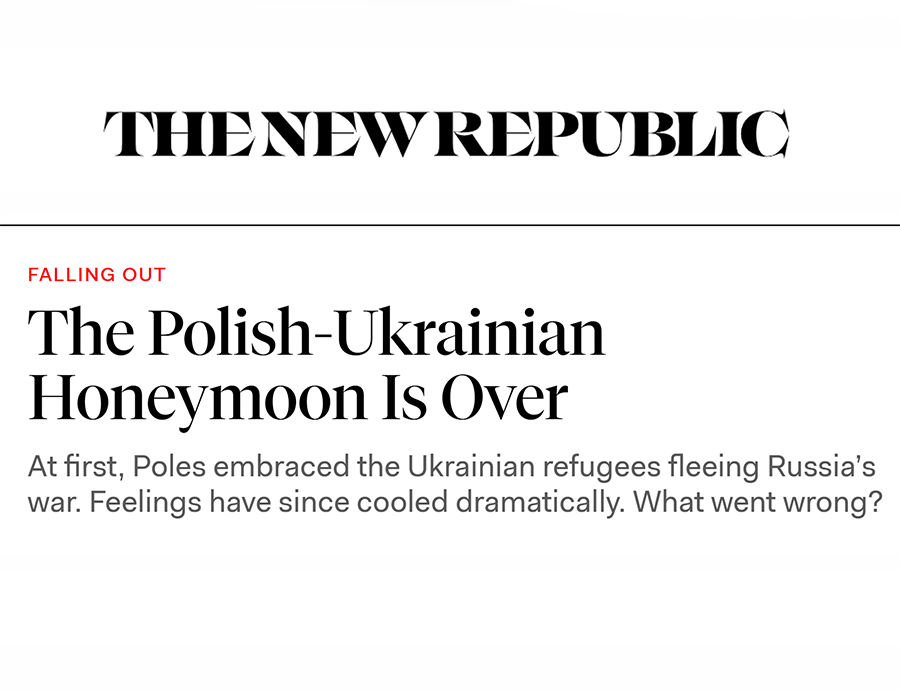
From Solidarity to Social Tensions: Changing Attitudes Toward Ukrainian Refugees in Poland
In the first months following Russia’s invasion of Ukraine in 2022, Poland became a symbol of unprecedented solidarity. Millions of citizens spontaneously engaged in supporting refugees by offering accommodation, food, financial assistance, and emotional support. In the in‑depth report “The Polish‑Ukrainian Honeymoon Is Over,” published in The New Republic (April 2026), Marta Zaraska cites Professor Małgorzata Kossowska of the Behaviour in Crisis Lab, highlighting the shift from this extraordinary wave of solidarity at the onset of the war to a marked decline in public acceptance of refugees in subsequent years.
Molinario, E., Elster, A., Dudek, I., Jaśko, K., Webber, D., Szumowska, E., Leander, N. P., Agostini, M., Kreienkamp, J., Sensales, G., Di Cicco, G., Jaume, L. C., Ellenberg, M., Wollschläger, D., Kruglanski, A. W., et al. (2026). Striving for Significance: Development and Validation of the Desire for Significance Scale. European Journal of Social Psychology.

21st Annual Meeting of the Polish Social Psychological Society
On 17–19 September 2026, Warsaw will host the 21st Annual Meeting of the Polish Social Psychological Society (PSPS) — one of the most important scientific gatherings for the social psychology community in Poland.

Ład i porządek, czyli dlaczego tak trudno jest nam zmienić zdanie
„Czy konserwatyści czują się mniej niepewni? Dlaczego ludzie chcą wierzyć, że świat jest sprawiedliwy? W czym tkwi siła dogmatyzmu?" – to pytania, wokół których toczy się rozmowa Katarzyny Sroczyńskiej z prof. Małgorzatą Kossowską, liderką Behaviour in Crisis Lab, kierowniczką Zakładu Psychologii Społecznej oraz Centrum Badań nad Poznaniem Społecznym w Instytucie Psychologii UJ, opublikowana na łamach OKO.press.
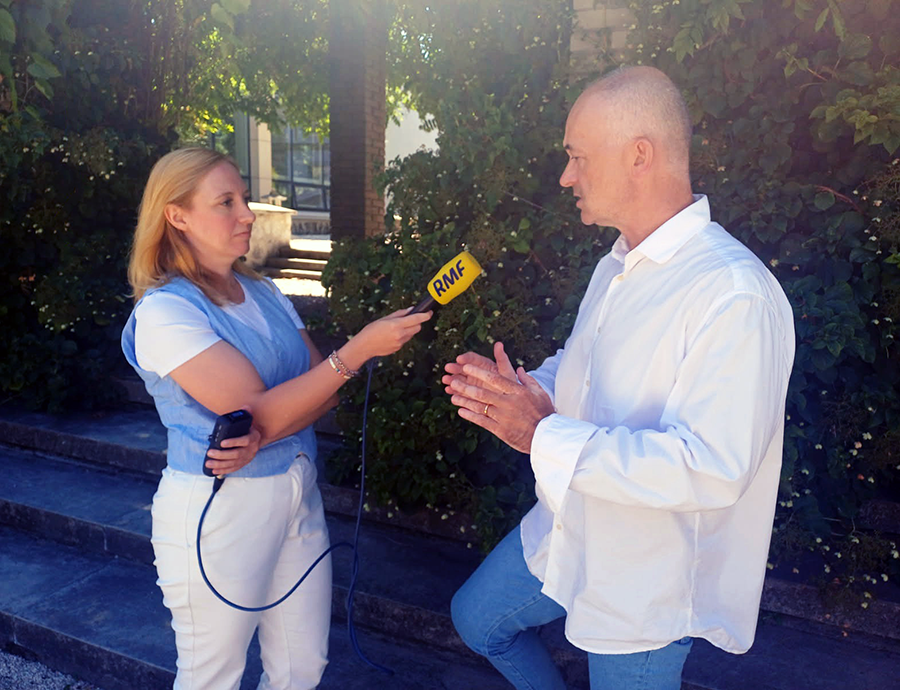
Jak funkcjonuje uczelniany organizm? Badania nad kondycją psychiczną środowiska akademickiego
Szacuje się, że niemal połowa studentów doświadcza wysokiego poziomu stresu, a co czwarty ma objawy depresji. Brakuje jednak danych, dotyczących kondycji psychicznej pracowników uczelni w całym kraju – zarówno naukowych jak i administracyjnych. Sytuację ma zdiagnozować grupa badawcza złożona z przedstawicieli szkół wyższych w Polsce – której działania będzie koordynował Uniwersytet Jagielloński. Projekt „Zdrowa Akademia” został wsparty finansowo przez Ministerstwo Nauki i Szkolnictwa Wyższego.
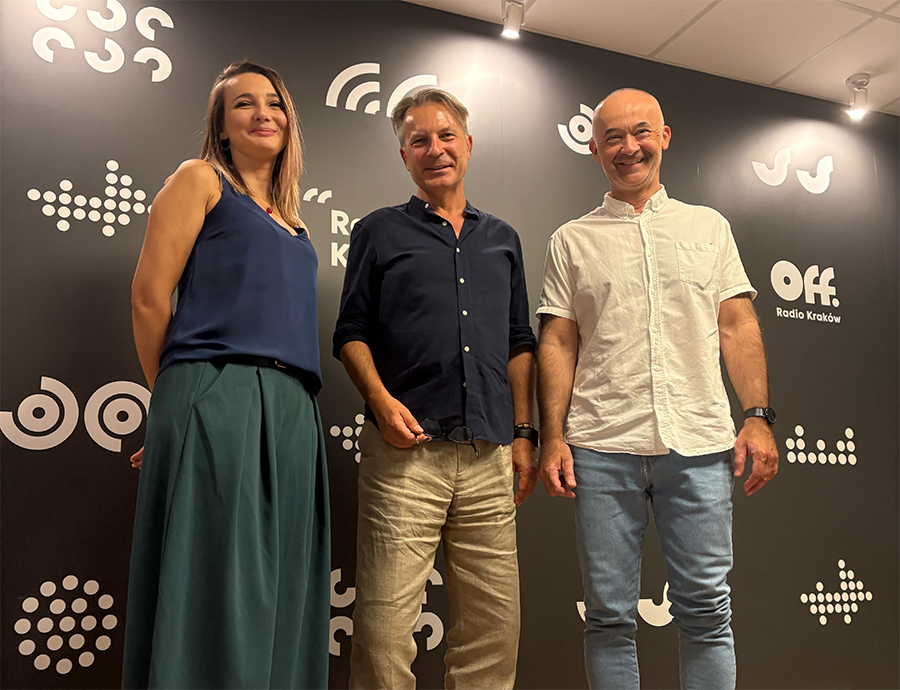
Nie tylko studenci. UJ sprawdza, co wpływa na zdrowie psychiczne pracowników nauki
„Rozmawiajmy o zdrowiu psychicznym, bo każdy ma wpływ na dobrostan innych ludzi” – mówił w Radiu Kraków dr hab. Hubert Kaszyński, prof. UJ, lider grupy badawczej Zdrowie psychiczne w organizacji - perspektywa badań nad instytucją w Behaviour in Crisis Lab i kierownik projektu „Zdrowa Akademia”, który ma pokazać, jak organizacja pracy wpływa na kondycję psychiczną środowiska akademickiego.

Prof. Bernadetta Izydorczyk on the Popularity of Psychology and the Quality of Education in an Interview for Radio 357
The growing interest in psychology studies is reflected in the increasing number of applicants to universities. At the same time, questions are being raised about the quality of education and training provided to future professionals. In the morning programme Poranek on Radio 357, this issue is discussed by Prof. Bernadetta Izydorczyk, National Consultant in Clinical Psychology and a member of the Behaviour in Crisis Lab at the Institute of Psychology, Jagiellonian University.

Forum Akademickie: “The Seven Deadly Sins of Polish Science”
We encourage you to read the article by Dr hab. Jolanta Perek-Białas, Professor at Jagiellonian University, leader of a thematic group at the Behaviour in Crisis Lab, and Professor Grażyna Prawelska-Skrzypek (Faculty of Management and Social Communication, Jagiellonian University), published in the May issue of Forum Akademickie. As the authors write, the impulse for the article came from an exchange of ideas resulting from their work within the Committee for the Study of Science of the Polish Academy of Sciences’ Working Group on the Governance and Institutionalization of Science.
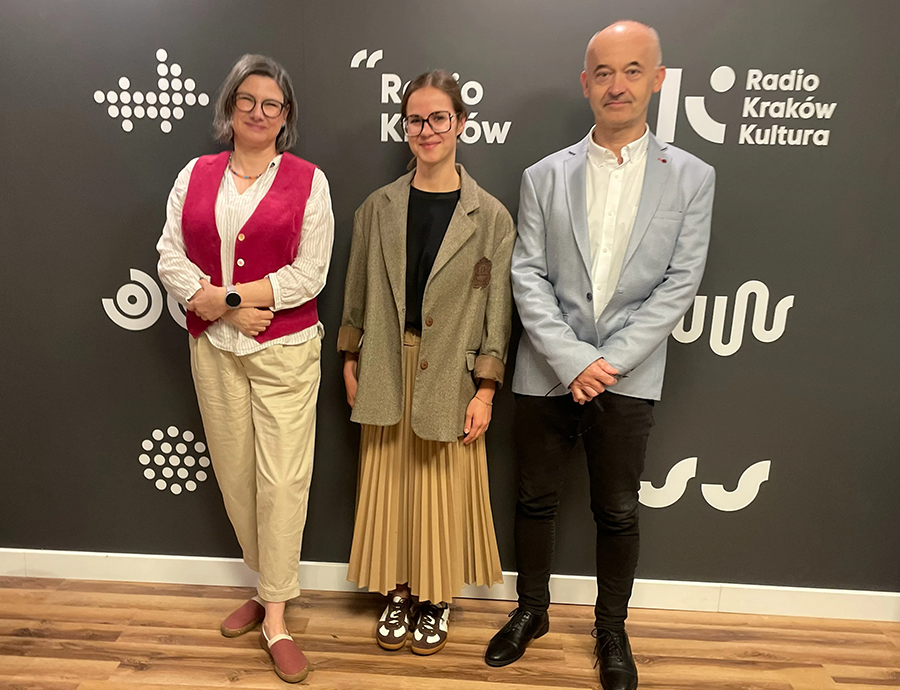
Rozmowa w Radiu Kraków: Zdrowa Akademia. Od czego zależy zdrowie psychiczne studentów i pracowników uczelni?
Zespół badawczy z Behaviour in Crisis Lab Uniwersytetu Jagiellońskiego opracuje rekomendacje dla polskich uczelni. W skład Zespołu Konsultacyjnego wchodzą profesorowie z ośrodków akademickich z całego kraju, a grupę badawczą tworzą pracownicy naukowi i administracyjni, doktoranci oraz studenci. Zapraszamy do wysłuchania rozmowy w Radiu Kraków z inicjatorem projektu dr hab. Hubertem Kaszyńskim, prof. UJ, Jagną Kazienko, kierowniczką Studenckiego Ośrodka Wsparcia i Adaptacji UJ oraz studentką psychologii UJ, Florentyną Zakrzewską.

Coraz więcej osób szuka wsparcia psychologicznego. O projekcie „Zdrowa Akademia” w Radiu Kraków
Projekt „Zdrowa Akademia”, współrealizowany przez Behaviour in Crisis Lab, był tematem audycji Radia Kraków poświęconej rosnącym potrzebom wsparcia psychologicznego w środowisku akademickim. Badania w ramach projektu obejmować będą całą społeczność uniwersytecką, nie tylko studentów, ale także pracowników naukowo-dydaktycznych i administracyjnych. Celem jest diagnoza zdrowia psychicznego całej społeczności akademickiej oraz przygotowanie rekomendacji dla uczelni w całej Polsce.

A World Without Certainty. How Radical Beliefs and Conspiracy Theories Emerge
Crises, information overload, political polarization, and a constant sense of change make uncertainty increasingly difficult to bear. As the need to regain control grows, we become more prone to radicalization, close ourselves off to dialogue, and turn to simple explanations for complex problems. In the Polish Academy of Sciences podcast, Behaviour in Crisis Lab leader Prof. Małgorzata Kossowska and journalist Katarzyna Sroczyńska explore the mechanisms behind this process.

Prof. Małgorzata Michel o granicach sharentingu i ochronie wizerunku dziecka
W debacie publicznej dotyczącej obecności dzieci w przestrzeni cyfrowej coraz częściej pojawiają się pytania o granice odpowiedzialności dorosłych, w szczególności rodziców oraz twórców internetowych. W dwóch materiałach opublikowanych na portalu RMF FM głos w tej sprawie zabrała prof. Małgorzata Michel, liderka grupy tematycznej Behaviour in Crisis Lab, ekspertka w obszarze pracy z dziećmi i młodzieżą, związana z zespołem ds. etyki badań z udziałem dzieci przy Biurze Rzeczniczki Praw Dziecka.

Online methodological seminar Researchers in Times of Crisis, part 14, cycle II: The Tyranny of Tenderness and the Dictatorship of Sensitivity? A Methodological Perspectiv
We invite you to visit the Behaviour in Crisis Lab YouTube channel, where a recording of the 14th and final meeting of the second cycle of the methodological seminar Researchers in Times of Crisis is now available. In the May seminar, Dr hab. Małgorzata Michel, Prof. at Jagiellonian University, together with her invited guests, discuss so‑called “tender methodologies” and their place in contemporary social sciences. The entire series is organized under the auspices of Behaviour in Crisis Lab.

Negatywne emocje w polityce nie muszą być niekorzystne. Rozmowa w PR24 z dr hab. Katarzyną Jaśko, prof. UJ
Negatywne emocje są nieodłącznym elementem polityki i, jak pokazują badania z zakresu psychologii społecznej, nie muszą być zjawiskiem wyłącznie niekorzystnym. W rozmowie na antenie Polskiego Radia 24 dr hab. Katarzyną Jaśko, prof. UJ z BiC Lab w Instytucie Psychologii Uniwersytetu Jagiellońskiego zwracała uwagę, że polityka dotyczy często spraw postrzeganych jako problematyczne, zagrażające lub niesprawiedliwe, dlatego wywołuje emocje takie jak lęk czy złość. Odpowiednio ukierunkowane negatywne emocje mogą jednak zwiększać uważność obywateli, skłaniać ich do poszukiwania informacji oraz mobilizować do działania.
Seminarium metodologiczne online Badaczki i badacze w czasach kryzysów cz. 13, cykl II: Neuroinkluzywne badania społeczne
Zapraszamy na kanał You Tube BiC Lab, na 13. spotkanie seminarium metodologicznego Badacze i Badaczki w czasach kryzysów. W kwietniu, obchodzonym jako Światowy Miesiąc Autyzmu, dr hab. Małgorzata Michel, prof. UJ, gości dr Dominikę Winogrodzką, socjolożkę i badaczkę społeczną z Instytutu Socjologii UJ, oraz Julię Kozakiewicz‑Domżał, kulturoznawczynię, edukatorkę i działaczkę społeczną związaną z ruchem neuroróżnorodności. Patronem cyklu jest Behaviour in Crisis Lab.

O Karcie Praw Dzieci Rodziców Pozbawionych Wolności. Rozmowa z prof. Małgorzatą Michel w Radio Kraków
W Polsce zacznie obowiązywać Karta Praw Dzieci Rodziców Pozbawionych Wolności. To dokument, który zobowiązuje zakłady karne do tworzenia przestrzeni przyjaznej dzieciom oraz umożliwienia im kontaktu z rodzicami odbywającymi karę. Karta nie ma charakteru aktu prawnego, ale stanowi oficjalnie przyjęty standard postępowania. Jego podpisanie zaplanowano na 19 marca.

Seminarium metodologiczne online Badaczki i badacze w czasach kryzysów cz. 12, cykl II: Dorośli w badaniach jakościowych
Na naszym kanale YouTube jest już dostępne 12 spotkanie w ramach II edycji seminarium metodologicznego Badacze i Badaczki w czasach kryzysów. Dr hab. Małgorzata Michel, prof. UJ gościła tym razem profesorkę Elżbietę Dubas (Uniwersytet Łódzki) oraz profesora Artura Fabisia (Akademia WSB), autorkę i autora wydanej niedawno książki „Badania jakościowe w andragogice. Polskie doświadczenia badawcze”. Spotkanie poświęcone było badaniom naukowym z udziałem osób dorosłych. Patronem cyklu jest Behaviour in Crisis Lab.
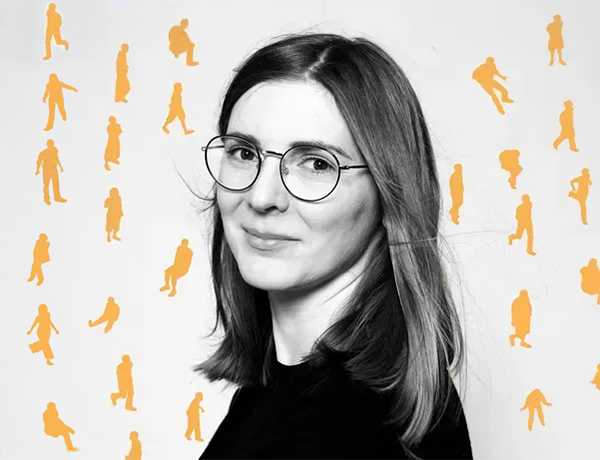
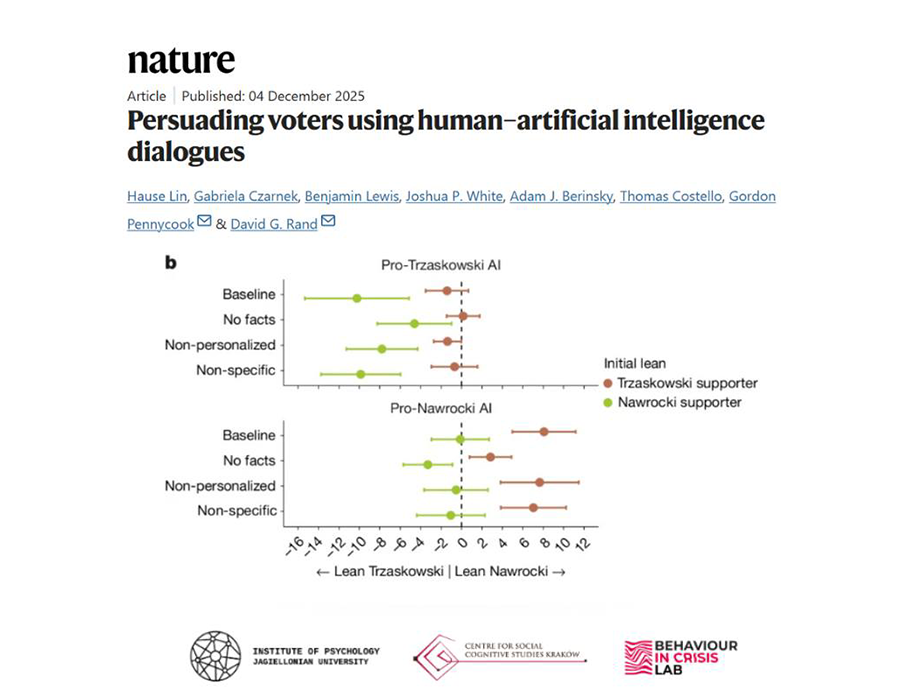
AI ma też patent na wybory. Dr Gabriela Czarnek w wideokaście projektu Pulsar
Jak skutecznie sztuczna inteligencja przekonuje do głosowania na konkretnego kandydata na prezydenta? Czy w Polsce naprawdę jest silna polaryzacja? Jak przekonania polityczne wpływają na wyższy lub niższy poziom zaufania do nauki? Zapraszamy na rozmowę Katarzyny Czarneckiej z dr Gabrielą Czarnek z Behaviour in Crisis Lab w Instytucie Psychologii Wydziału Filozoficznego UJ.

Seminarium metodologiczne online Badaczki i badacze w czasach kryzysów cz. 11, cykl II: FOKUS NA FOCUS. SIŁA W GRUPIE
Zapraszamy na nasz kanał YT, na kolejne, jedenaste już seminarium metodologiczne Badacze i Badaczki w czasach kryzysów. W drugim spotkaniu II edycji zatytułowanym FOKUS NA FOCUS. SIŁA W GRUPIE gościnią dr hab. Małgorzaty Michel, prof. UJ była dr Katarzyna Archanowicz-Kudelska z Katedry Psychologii Ekonomicznej Akademii Leona Koźmińskiego w Warszawie. Patronem cyklu jest Behaviour in Crisis Lab.
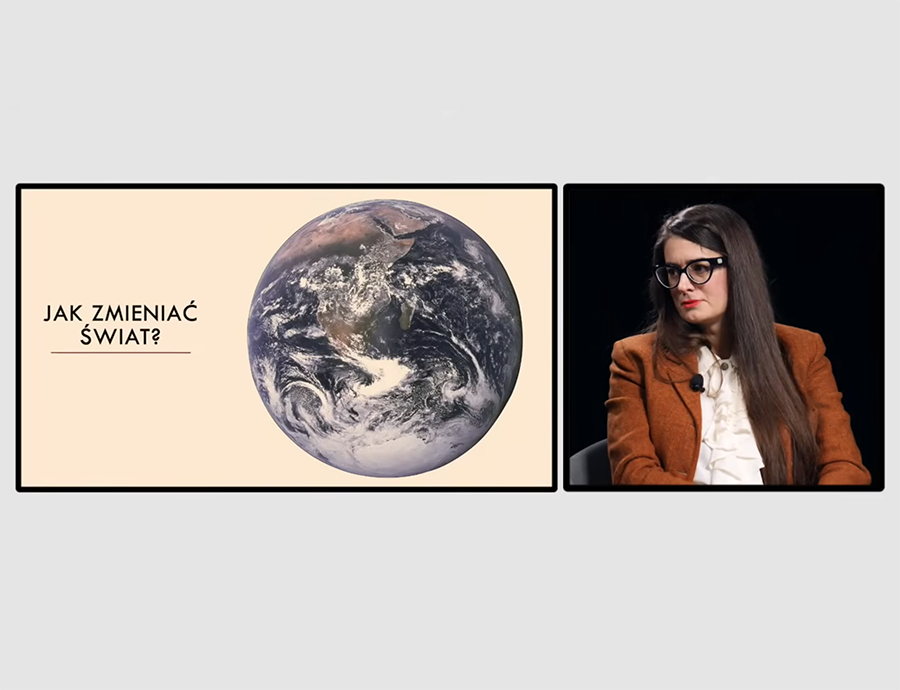
What Do Scientific Studies Say About Activism and Extremism? Prof. Katarzyna Jaśko from the Behavior in Crisis Lab on Changing the World for the Better
In a lecture on the Copernicus channel, Dr. hab. Katarzyna Jaśko, Professor at Jagiellonian University, talks about the effectiveness of actions aimed at social change and the sense of meaning they provide—even when change does not come immediately. The material was created as part of the project “It’s complicated.” Popularization of science during the rise of the popularity of pseudoscience, implemented by the Copernicus Center Foundation.
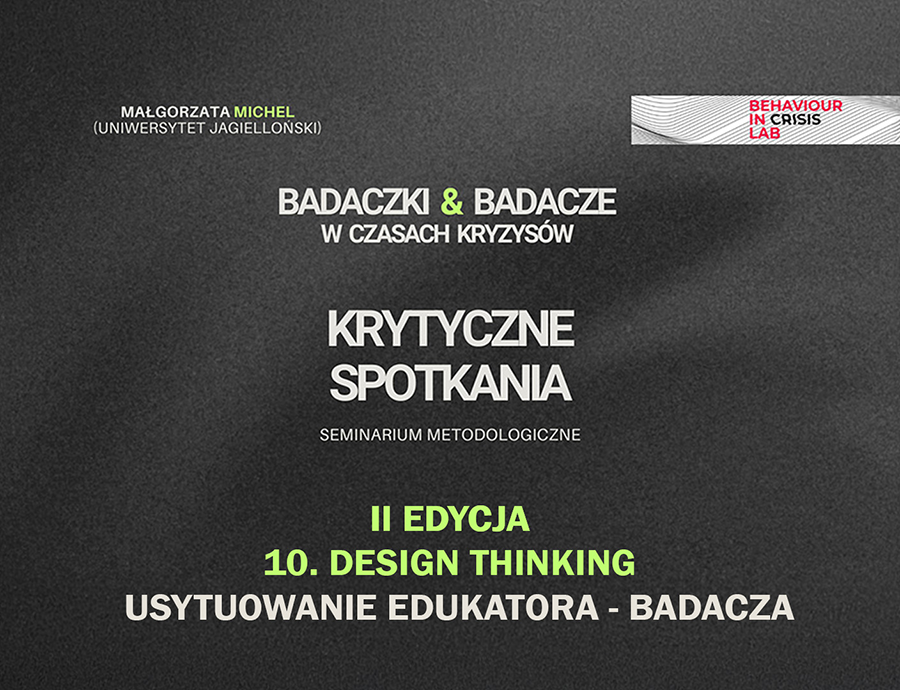
Seminarium metodologiczne Badaczki i badacze w czasach kryzysów cz. 10, cykl II: DESIGN THINKING. USYTUOWANIE EDUKATORA-BADACZA
Pierwsze w 2026 roku seminarium metodologiczne "Badacze i Badaczki w czasach kryzysów jest już dostępne na kanale YT Behaviour in Crisis Lab. W jubileuszowym, dziesiątym spotkaniu dr hab. Małgorzata Michel, prof. UJ, gości dr Agnieszkę Stachnik – akademiczkę i badaczkę z Wrocławia, która zajmuje się działalnością badawczo-dydaktyczną oraz pracą edukacyjną z dziećmi pochodzącymi ze zróżnicowanych środowisk kulturowych.
Zapraszamy do zapoznania się z nagraniem!

About Psychology in Times of Uncertainty. Prof. Kossowska on the Polish Academy of Sciences Podcast
We live in a world where crises do not follow one another but rather overlap. The pandemic, war, climate change, disinformation, and the erosion of trust in institutions create a state of permanent tension. Social psychology does not promise simple solutions, but it helps us better understand why, under such conditions, people make decisions that may seem incomprehensible from the outside. We invite you to listen to the podcast!
Ekspertka BiC Lab o przemocy rówieśniczej, która kończy się śmiercią: widzę dwie ofiary - jedna zginęła, druga dokonała tego czynu
Tragiczne wydarzenia z Jeleniej Góry, w których zginęła 11-letnia dziewczynka, a sprawczynią była jej 12-letnia koleżanka, wstrząsnęły opinią publiczną. Prof. Małgorzata Michel, liderka grupy tematycznej "Młodzież w sytuacjach kryzysowych" Behaviour in Crisis Lab, podkreśla w wywiadzie dla Polskiej Agencji Prasowej, że niezależnie od tego, co zawiniło w tej konkretnej sytuacji mamy do czynienia z dwiema ofiarami – jedną, która straciła życie, i drugą, która dokonała czynu. Rzeczniczka Praw Dziecka zadeklarowała, że będziemy chronić tę dziewczynkę i jej rodzinę. Nie wiemy, co się w życiu tego dziecka podziało, a niebezpieczeństwo linczu społecznego, sądząc po komentarzach w mediach społecznościowych, jest ogromne.

About the mechanisms behind societal radicalization
Where do extreme views come from? Why don’t we all become radicalized? And what do the data really say about social divides? Find out in the latest episode of the Science Live podcast on the Copernicus channel, featuring Dr. Katarzyna Jaśko, Associate Professor at Jagiellonian University, in conversation with Piotr Urbańczyk from the Copernicus Center for Interdisciplinary Studies.
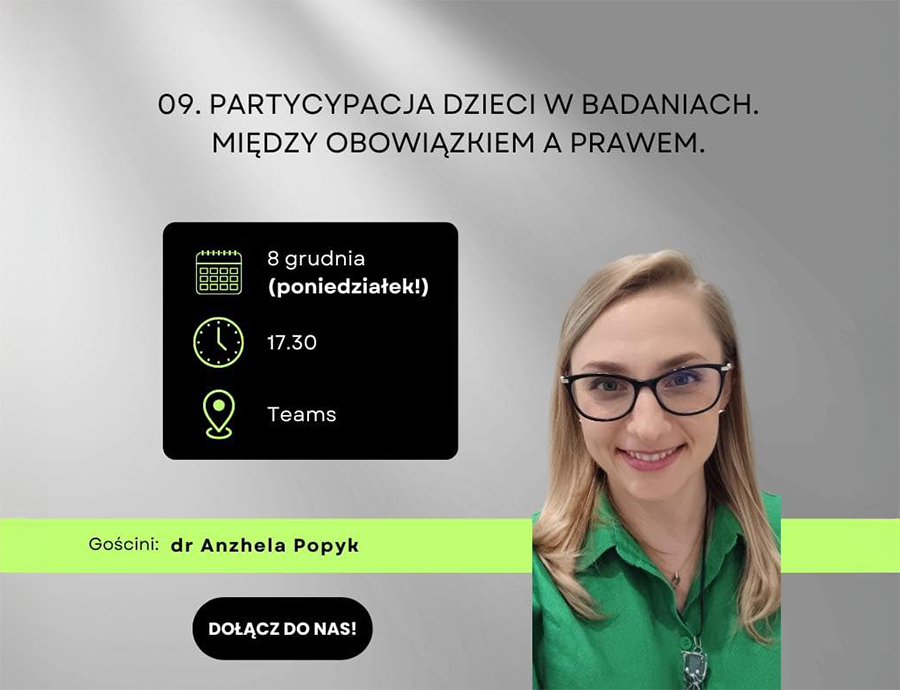
Badaczki i badacze w czasach kryzysów cykl II cz.9
Zapraszamy na ostatnie w tym roku kalendarzowym seminarium metodologiczne w ramach Behaviour in Crisis Lab PARTYCYPACJA DZIECI W BADANIACH. MIĘDZY OBOWIĄZKIEM A PRAWEM. Gościnią prof. Małgorzaty Michel jest dr Anzhela Popyk, socjolożka specjalizująca się w migracjach, transnarodowym dzieciństwie i edukacji wielokulturowej, ekspertka w dziedzinie integracji i edukacji dzieci z doświadczeniem migracyjnym i uchodźczym, wykorzystująca metody badań partycypacyjnych. Jej badania koncentrują się na doświadczeniach migracyjnych dzieci, młodzieży i dorosłych w Polsce. Dr Popyk koordynuje centrum badawcze „Młodzi w centrum” przy SWPS.
Seminarium jest dostępne na naszym kanale YT.
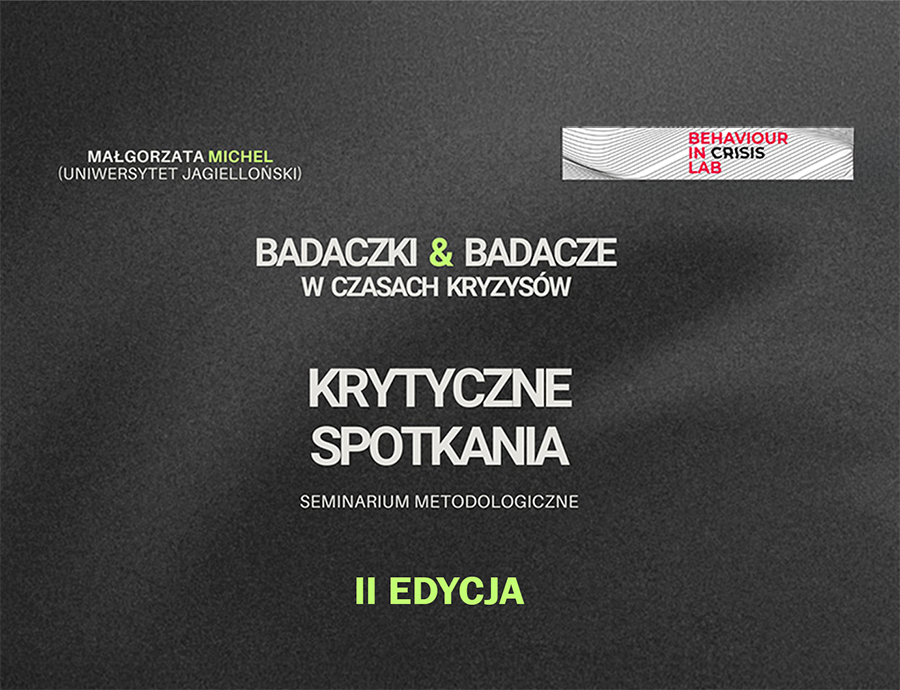
II edycja seminarium metodologicznego "Badaczki i badacze w czasach kryzysów. Krytyczne spotkania"
Drugą edycję akademickiego seminarium metodologicznego online Badaczki & Badacze w czasach kryzysów rozpoczyna spotkanie zatytułowane "Action Research. Metaperspektywy". Gościnią prof. Małgorzaty Michel jest dr Agata Borowska, reprezentantka nauk społecznych, adiunktka badawczo-dydaktyczna Uniwersytetu Jana Kochanowskiego w Kielcach, absolwentka Szkoły Doktorskiej Uniwersytetu Ignatianum w Krakowie oraz Wydziału Pedagogiki i Psychologii Uniwersytetu w Białymstoku, w specjalności pedagogika wczesnoszkolna z przedszkolną oraz rewalidacyjna. Badawczo osadzona w metodologii badań jakościowych, m.in. partycypacyjno-edukacyjnych action research w modelu Mode-2 Science. Ten właśnie model uprawiania badań jest tematem seminarium.

Przestaliśmy się bać Rosjan, zaczęliśmy się bać Ukraińców, a powiedzieli to nam politycy
Polecamy wywiad z prof. Małgorzatą Kossowską dla portalu OKO.press, która wraz z zespołem z Behaviour in Crisis Lab bada postawy wobec uchodźców. Zdaniem badaczki nastąpiła zmiana na gorsze i odpowiada za to klasa polityczna, polaryzacja, media społecznościowe, media prawicowe, ale też... te, które tę nagonkę piętnują.[
What Constitutes Social Research Involving Children?
To mark the conclusion of the nationwide campaign Childhood Without Violence, Professor Małgorzata Michel gave an interview on Radio Kraków addressing the ethical principles of conducting social research involving children. Professor Michel leads the Team for Standards of Ethics in Social Research Involving Children at the Office of the Commissioner for Children’s Rights.
We invite you to listen to the broadcast!
Zrozumieć, zamiast dyscyplinować
Zachęcamy do zapoznania się z wywiadem przeprowadzonym z prof. Hubertem Kaszyńskim, o tytule "Zrozumieć, zamiast dyscyplinować".

Documentary film "Polishness"
We strongly encourage you to watch the documentary film "Polishness".
Zanim przyjdą po nas z grabiami
Zachęcamy do zapoznania się z wywiadem prof. Anny Siewierskiej-Chmaj!