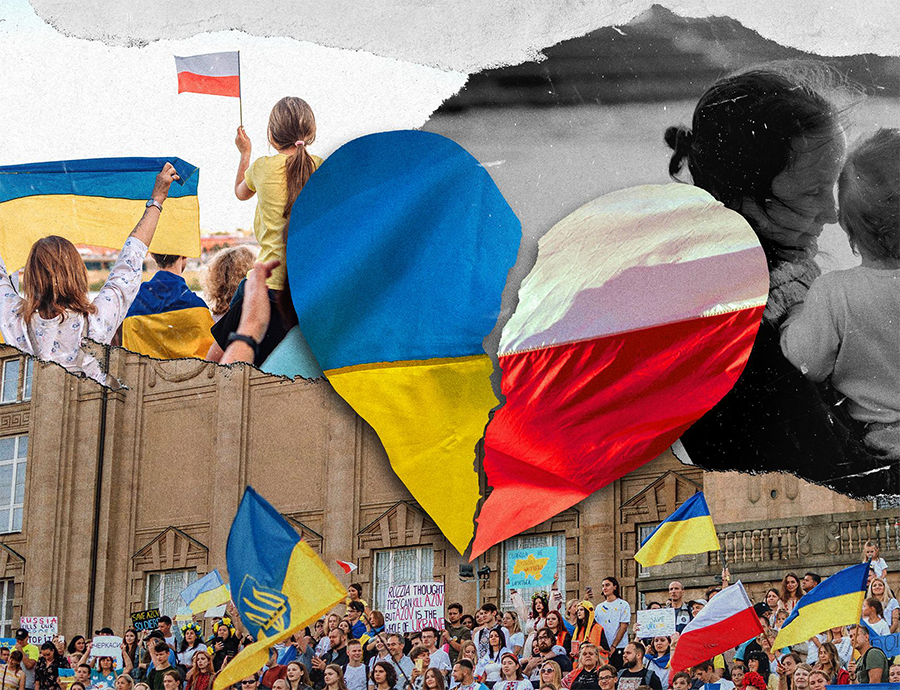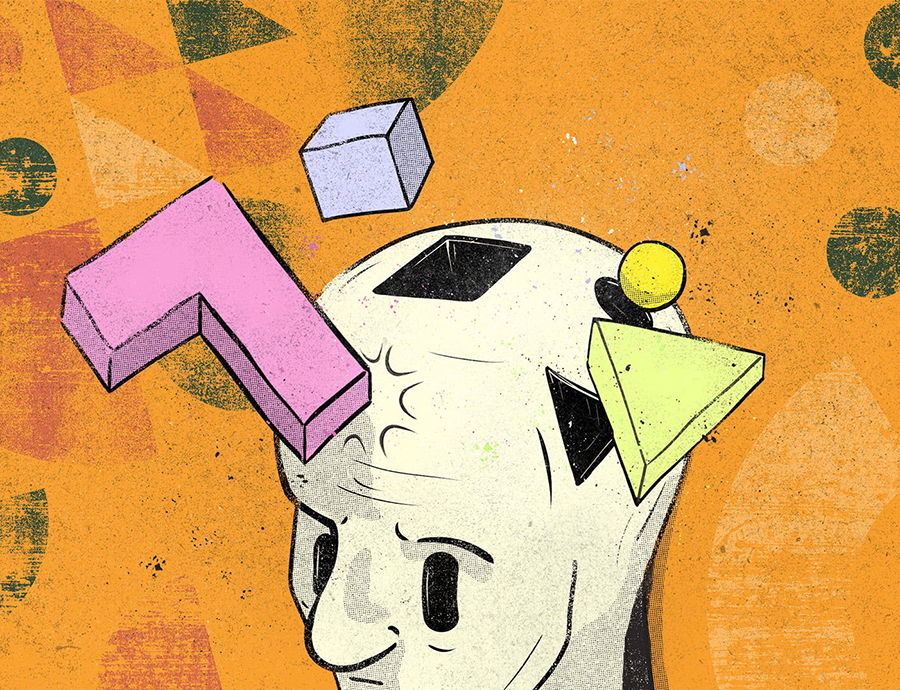
We live in a world where crises do not follow one another but rather overlap. The pandemic, war, climate change, disinformation, and the erosion of trust in institutions create a state of permanent tension. Social psychology does not promise simple solutions, but it helps us better understand why, under such conditions, people make decisions that may seem incomprehensible from the outside. We invite you to listen to the podcast!
In the latest episode of the podcast "Okruszek wiedzy" under the aegis of the Academia portal of the Polish Academy of Sciences, Prof. Łukasz Okruszek talks with Prof. Małgorzata Kossowska from Jagiellonian University, head of the Department of Social Psychology, about what social psychology says about trust and decision-making under pressure.
“Regardless of what social processes we want to describe and understand, at the end of it all, there is a human being,” emphasizes Prof. Kossowska. A human being immersed in a social, cultural, and emotional context. This makes uncertainty a collective experience, not just an individual problem.
Under such conditions, the demand for simple explanations and clear answers grows. Psychology, however, shows that this is precisely when cognitive illusions and a false sense of control easily arise. “We like to fear terrible, grand things, while those that are truly dangerous often escape our attention,” notes Prof. Kossowska. Instead of confronting real, long-term threats, attention shifts to spectacular scenarios that organize fear but explain little.
Uncertainty also triggers defensive strategies. Some work quickly but briefly—others more slowly, yet lastingly. “We know that engaging in groups that matter to us provides a long-term effect of mitigating uncertainty,” says Prof. Kossowska. This explains both the strength of communities built on trust and the tendency to retreat into information bubbles, where sharing views becomes a way of regulating emotions rather than seeking truth.
Social psychology approaches promises cautiously—claims that scientific knowledge can be directly translated into political decisions or ready-made action plans. “The answer ‘it depends’ is not avoiding the question—it is honest,” stresses the researcher. Social phenomena are too complex to be reduced to a single mechanism or one piece of advice that works always and everywhere.
Okruszek wiedzy: Małgorzata Kossowska - YouTube
source: Okruszek Wiedzy: Prof. Kossowska o psychologii w czasach niepewności, academia.pan.pl
CC BY-SA (Creative Commons Attribution-ShareAlike)