
News - Behaviour in Crisis Lab
Join the Global Crises Project: An International Call for Collaborators
Behaviour in Crisis Lab at Jagiellonian University invites researchers from around the world to join the Global Crises Project, a large-scale international research initiative conducted in collaboration with the Centre for the Politics of Feelings at Royal Holloway, University of London, and affiliated with the Psychological Science Accelerator (PSA).
Researchers interested in participating are invited to submit an expression of interest by 31 October 2026.
Researchers interested in participating are invited to submit an expression of interest by 31 October 2026.
News:
seminarium
wydarzenia
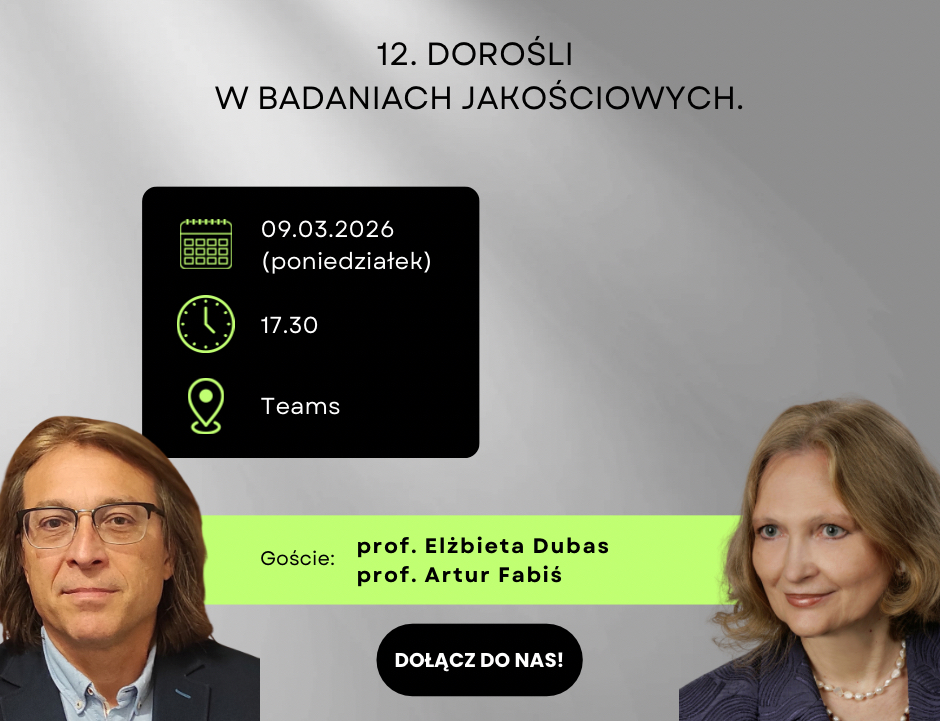
Seminarium metodologiczne online Badaczki i badacze w czasach kryzysów cz. 12, cykl II: Dorośli w badaniach jakościowych
03.03.2026
9 marca zapraszamy na 12 spotkanie seminarium metodologicznego Badacze i Badaczki w czasach kryzysów. Dr hab. Małgorzata Michel, prof. UJ gościć będzie profesorkę Elżbietę Dubas oraz profesora Artura Fabisia, autorkę i autora wydanej niedawno książki „Badania jakościowe w andragogice. Polskie doświadczenia badawcze”. Spotkanie poświęcone będzia badaniom naukowym z udziałem osób dorosłych. Patronem cyklu jest Behaviour in Crisis Lab.
Read More o Seminarium metodologiczne online Badaczki i badacze w czasach kryzysów cz. 12, cykl II: Dorośli w badaniach jakościowych
meetings
wydarzenia
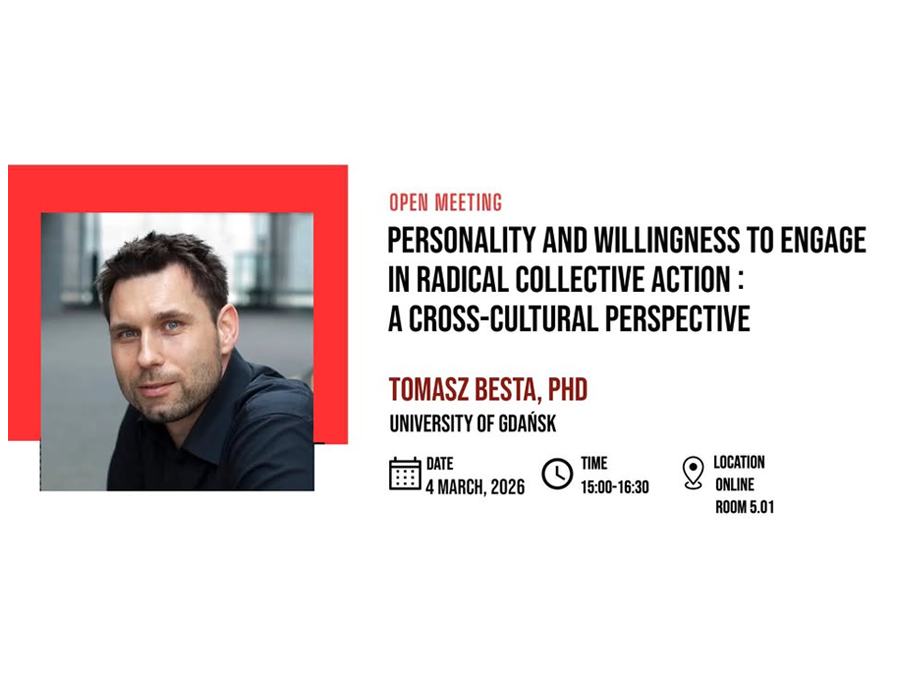
BiC Lab open meeting: Personality and Willingness to Engage in Radical Collective Action: A Cross-Cultural Perspective
03.03.2026
We invite you to the weekly open meeting of the Behaviour in Crisis Lab. The speaker at the upcoming session will be Dr hab. Tomasz Besta, Associate Professor at the Environmental Psychology and Intergroup Relations Unit at the Institute of Psychology, University of Gdańsk. The meeting will focus on the links between personality traits and the willingness to engage in radical, including violent, forms of political action.
Read More o BiC Lab open meeting: Personality and Willingness to Engage in Radical Collective Action: A Cross-Cultural Perspective

aktualności
artykuł
publikacja
Facts Won’t Save Us: Why Political Beliefs Are So Hard to Change
03.03.2026
Why do we so rarely change our political views, even when confronted with solid evidence and logical arguments? The latest article by Prof. Małgorzata Kossowska and Anna Knorr, published on the platform of the International Society for the Science of Existential Psychology (ISSEP), sheds new light on the psychological and neural mechanisms behind resistance to knowledge. The authors argue that the key to understanding the rigidity of beliefs is not a specific ideology, but rather the strength of group identification and the perceived threat to one’s identity.
Read More o Facts Won’t Save Us: Why Political Beliefs Are So Hard to Change
aktualności
kurs
Zapisy na kurs "Społeczne i komunikacyjne wyzwania ochrony środowiska"
16.02.2026
Ruszyły zapisy na kurs "Społeczne i komunikacyjne wyzwania ochrony środowiska" (2 ECTS) dla studentów i studentek I stopnia. Dr hab. Małgorzata Grodzińska-Jurczak, prof. UJ z Instytutu Nauk o Środowisku Wydziału Biologii opowie Wam o zarządzaniu środowiskiem z perspektywy interdyscyplinarnej, głównie ekologicznej i społecznej, z pozycji naukowca i praktyka.
Read More o Zapisy na kurs "Społeczne i komunikacyjne wyzwania ochrony środowiska"
media
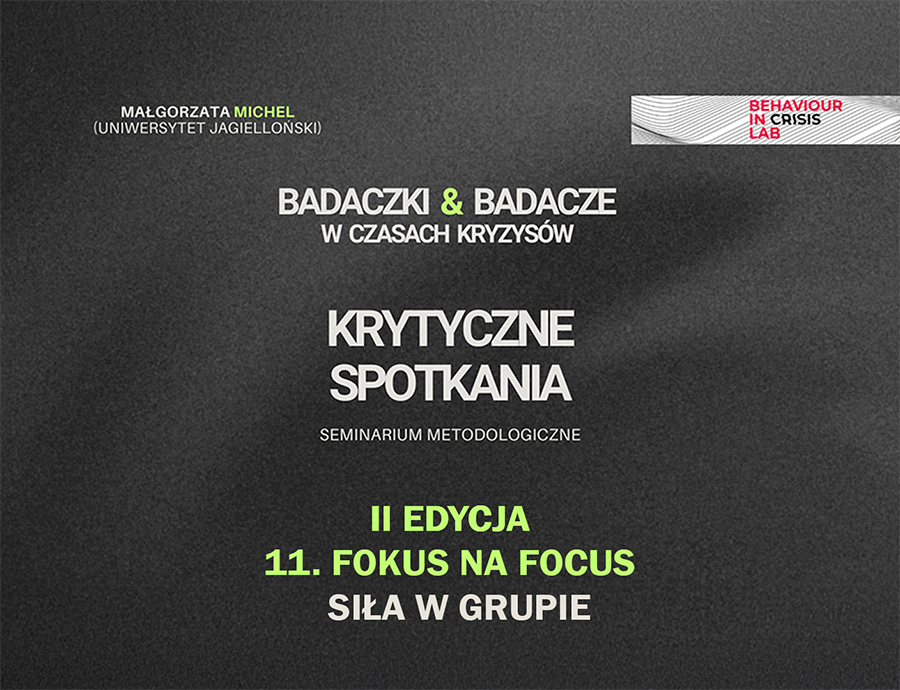
Seminarium metodologiczne online Badaczki i badacze w czasach kryzysów cz. 11, cykl II: FOKUS NA FOCUS. SIŁA W GRUPIE
11.02.2026
Zapraszamy na nasz kanał YT, na kolejne, jedenaste już seminarium metodologiczne Badacze i Badaczki w czasach kryzysów. W drugim spotkaniu II edycji zatytułowanym FOKUS NA FOCUS. SIŁA W GRUPIE gościnią dr hab. Małgorzaty Michel, prof. UJ była dr Katarzyna Archanowicz-Kudelska z Katedry Psychologii Ekonomicznej Akademii Leona Koźmińskiego w Warszawie. Patronem cyklu jest Behaviour in Crisis Lab.
Read More o Seminarium metodologiczne online Badaczki i badacze w czasach kryzysów cz. 11, cykl II: FOKUS NA FOCUS. SIŁA W GRUPIE